
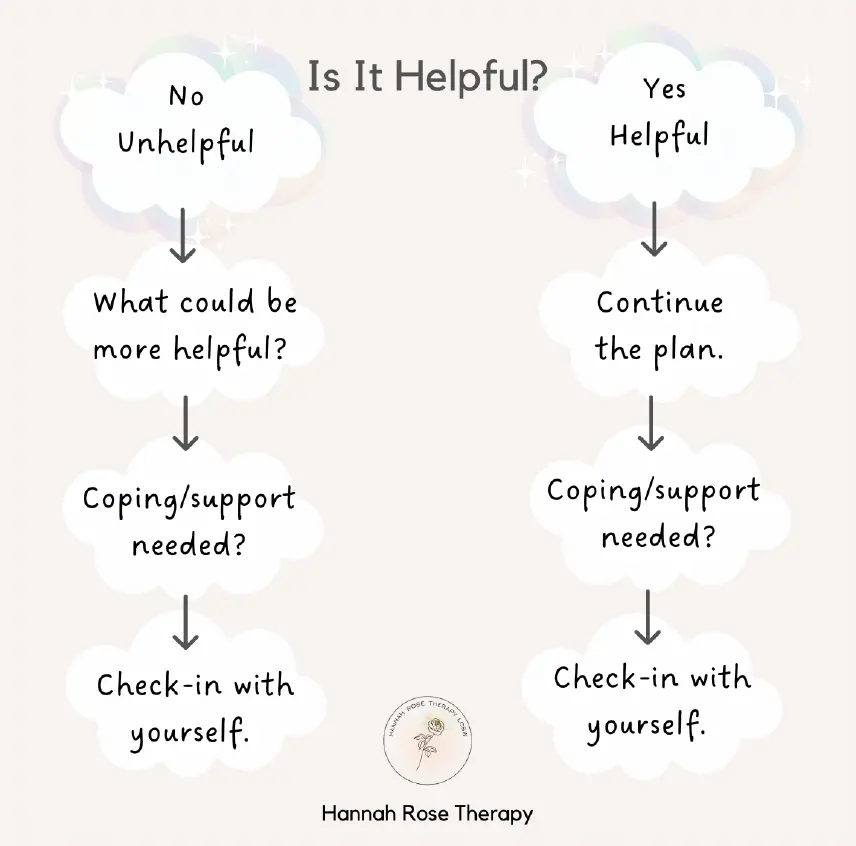
Dialectical Behavior Therapy (DBT) is a type of cognitive-behavioral therapy that focuses on teaching individuals skills to cope with stress, regulate emotions, and improve relationships with others. DBT combines strategies like mindfulness, emotional regulation, distress tolerance, and interpersonal effectiveness. It was originally designed by Dr. Marsha Linehan in the late 1980s to treat borderline personality disorder, but has since been adapted for other mental health experiences, such as depression and anxiety.
DBT is designed to help individuals develop more balance between acceptance and change — learning to accept themselves and their situations while also working towards positive change. The structure and support of DBT aim to provide a comprehensive approach to managing and improving mental health and overall wellness. This often involves using mindfulness-based approaches.
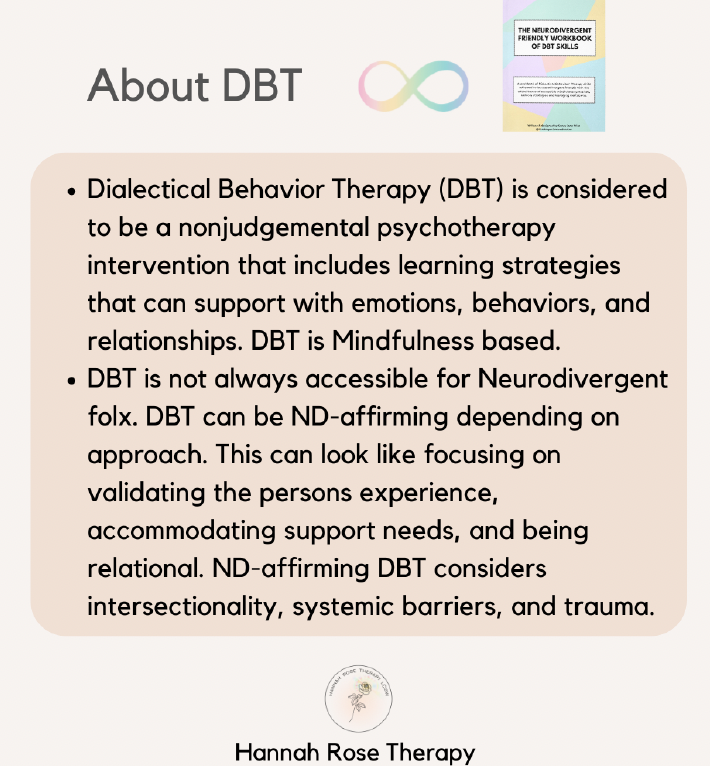
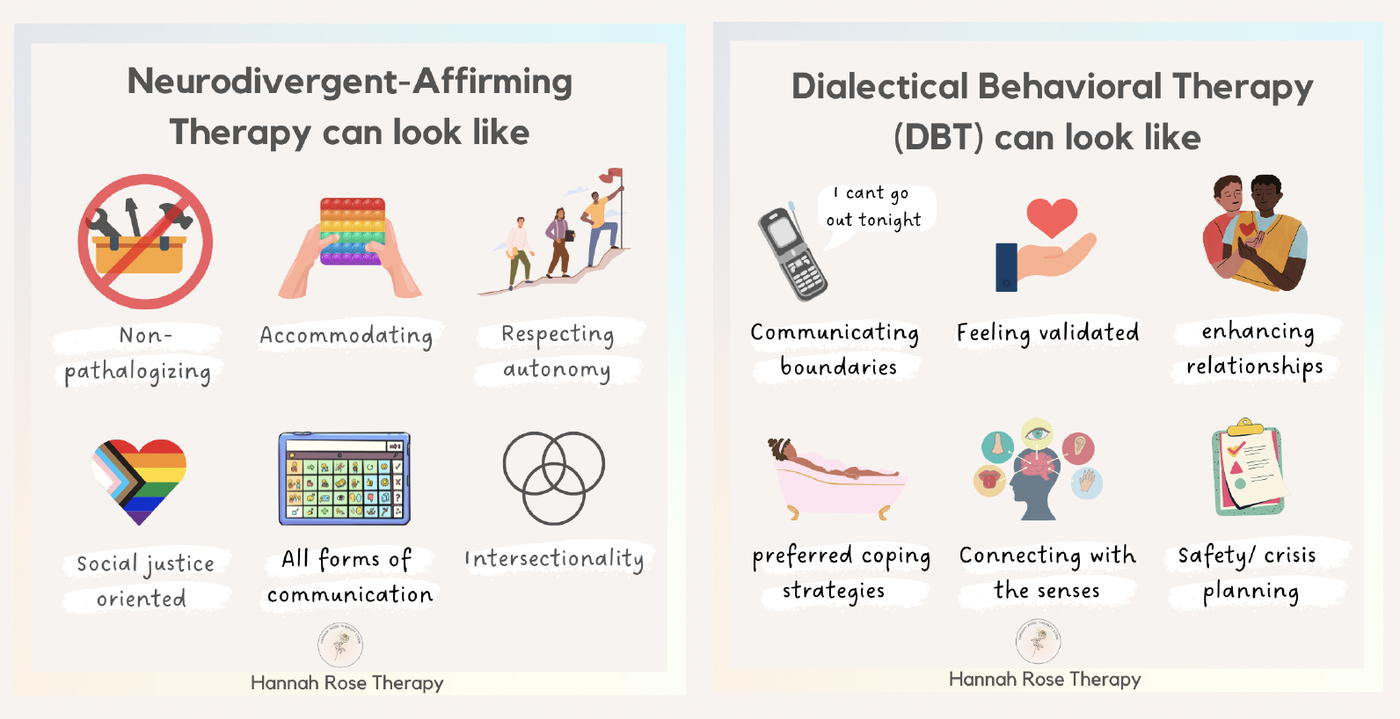
Hannah Rose Therapy values using a neurodivergent affirming and trauma-informed approach as part of the therapeutic process.
The four main DBT modules
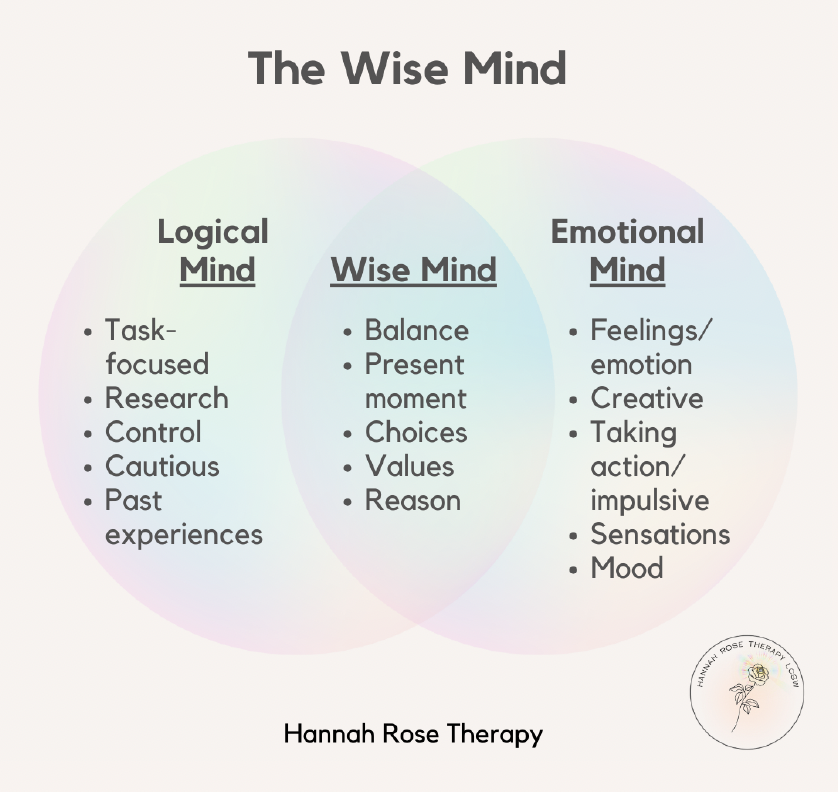
- Mindfulness. Enhancing the ability to focus on the present moment, using somatic tools to support nervous system regulation.
- Distress tolerance. Learning to tolerate distress across settings.
- Emotion regulation. Understanding and managing intense emotions.
- Interpersonal effectiveness. Developing skills to communicate effectively and maintain healthy relationships.
Clinical applications
DBT has specific clinical applications, addressing a range of emotional and behavioral experiences for adults and teens. Some key applications include:
- Emotional dysregulation. DBT helps individuals who experience intense and rapidly changing emotions, teaching skills to manage and stabilize emotions.
- Self-harm and suicidal behaviors. DBT provides tools to cope with distress without resorting to self-harm or suicidal behaviors, offering alternatives and crisis management techniques.
- Depression and anxiety. DBT addresses symptoms of depression and anxiety by helping develop more effective ways to cope with stress and difficult feelings.
- Impulsive behaviors. DBT teaches mindfulness and self-control strategies to reduce impulsivity.
- Interpersonal conflicts. DBT improves communication skills and helps individuals navigate conflicts more effectively.
DBT with Hannah Rose Therapy
- Meeting one-on-one with Hannah Spivak, LCSW, a DBT trained therapist. Sessions are used to address specific concerns, develop and practice new skills, and ensure progress toward your goals.
- Clients can use journaling, worksheets, visuals, or a DBT workbook to track specific emotions, behaviors, and triggers. This can support the work between and outside of therapy sessions.
- Psychoeducation about mindfulness and the nervous system.
Professional experience
License information. Hannah Spivak is a Licensed Clinical Social Worker in the State of Colorado (CSW.09928629).
Degree information. Hannah Spivak graduated from Metropolitan State University of Denver in 2017 with a Master's degree in social work, and holds a Bachelor's degree in social work from Northeastern Illinois University.
Regulation of psychotherapists. The Colorado Department of Regulatory Agencies has the general responsibility of regulating the practice of licensed psychologists, licensed social workers, licensed professional counselors, licensed marriage and family therapists, licensed school psychologists practicing outside the school setting, licensed or certified addiction counselors, and unlicensed individuals who practice psychotherapy.
Most recent DBT certification. PESI, Inc. — speaker Lane Pederson, PsyD, LP, CDBT. Certificate of completion, July 2023.